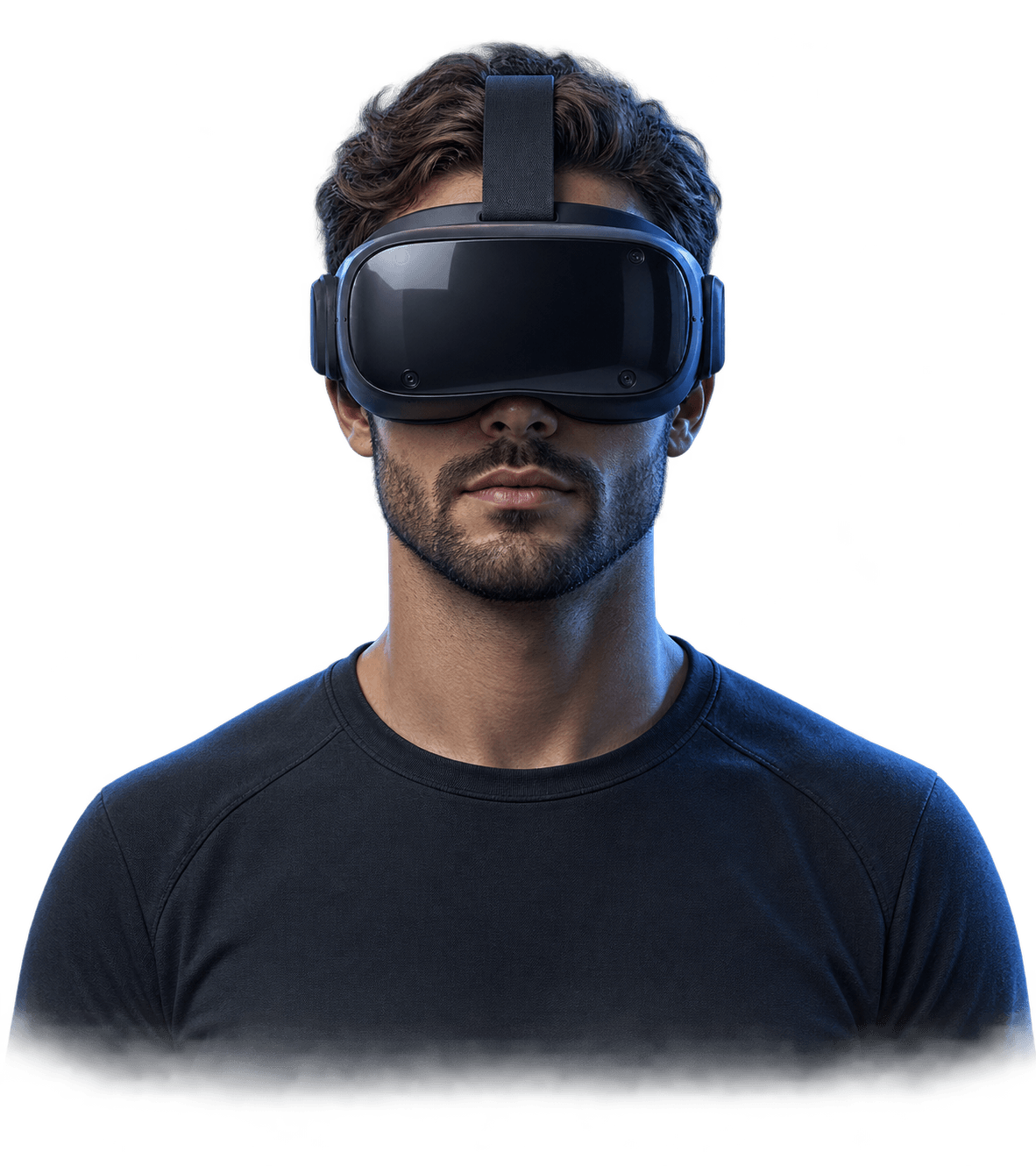
Tokyo 2020
System foundation
Established the navigation, content hierarchy and live-viewing vocabulary.
What carried forward
- Persistent navigation
- Schedule and medals architecture
- Curated content and library model
NBC Olympics / VR broadcast / 2020—2022
The Games, inside the moment.
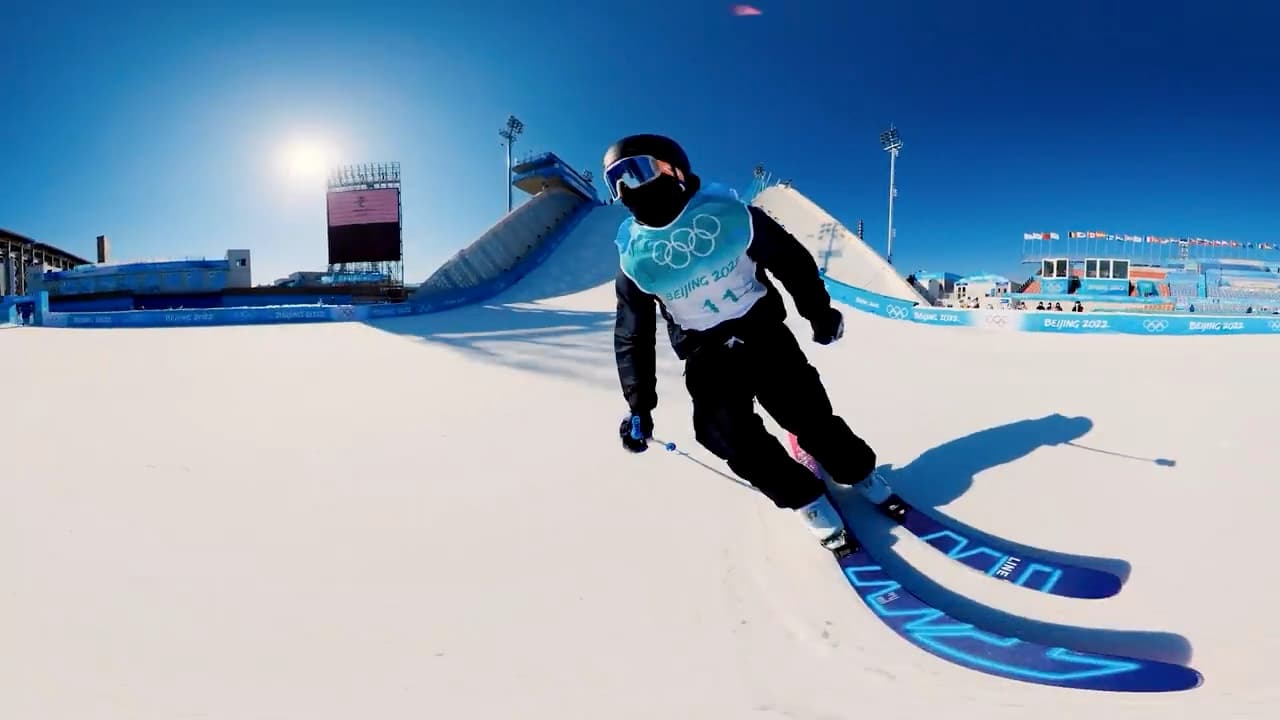
150+ hours of live and on-demand Olympic coverage—designed for presence.
02
Inside a headset, people still need to discover, watch and understand live sport. What they can no longer do is step outside it to get their bearings — every answer has to arrive without costing them the room they are standing in.
A television viewer who wants the medal table looks away from the screen. A viewer in a headset has nowhere to look away to. That single difference is what the whole product had to answer for — and it turns five ordinary broadcast problems into spatial ones.
03
The interface should arrive when it adds context—and disappear when the live moment takes over.
Find something worth watching.
Attention risk
Too much content, not enough context.
Design response
Curated entry points.
Stay present in the moment.
Attention risk
Controls compete with the action.
Design response
Interface recedes during play.
Understand what is happening.
Attention risk
Context requires leaving the venue.
Design response
Stats open over the live scene.
Revisit a key moment.
Attention risk
Finding the right moment is slow.
Design response
Event-aware replay and saved content.
Share the experience.
Attention risk
Social layers become distracting.
Design response
Social remains an intentional destination.
04
Tokyo 2020 established the system. Beijing 2022 extended it for greater scale, depth and social presence.
Tokyo 2020
Established the navigation, content hierarchy and live-viewing vocabulary.
What carried forward
Core system+Added depth
Shared foundation
One navigation model. One content architecture. A deeper second Games.
Beijing 2022
Expanded the same system for more programming, deeper context and social presence.
What evolved
The system wasn’t redesigned for Beijing. It was extended—reducing rebuild effort while supporting greater content depth.
One component. Two Games.
The structure remained familiar while dates, sports and session-level detail expanded for Beijing.
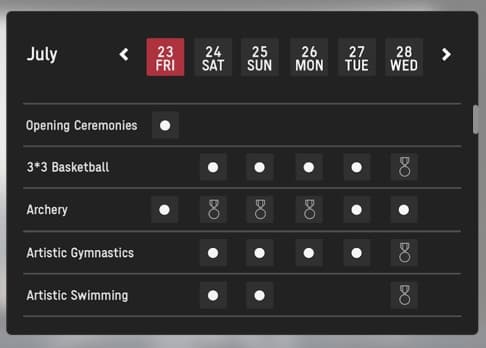
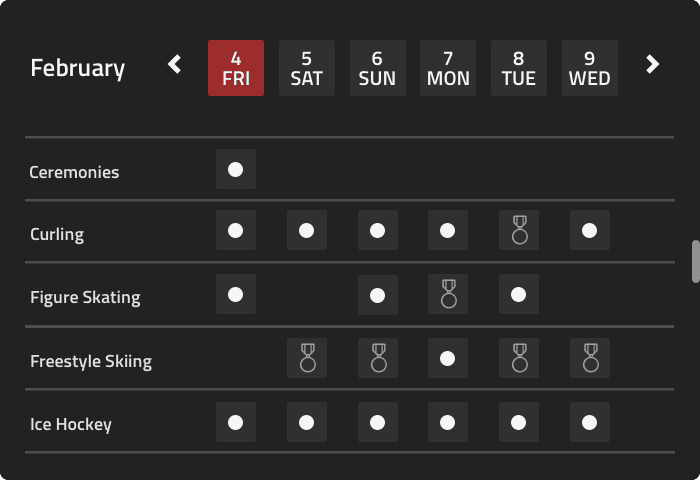
Structure retained
The same temporal grid and navigation pattern carried forward.
Content repopulated
Dates, sports and sessions changed without rebuilding the component.
Detail deepened
Beijing added clearer session, time and venue context.
05
A spatial hierarchy that supports how people naturally engage with live sport.
Find what matters
Be in the moment
Get the context
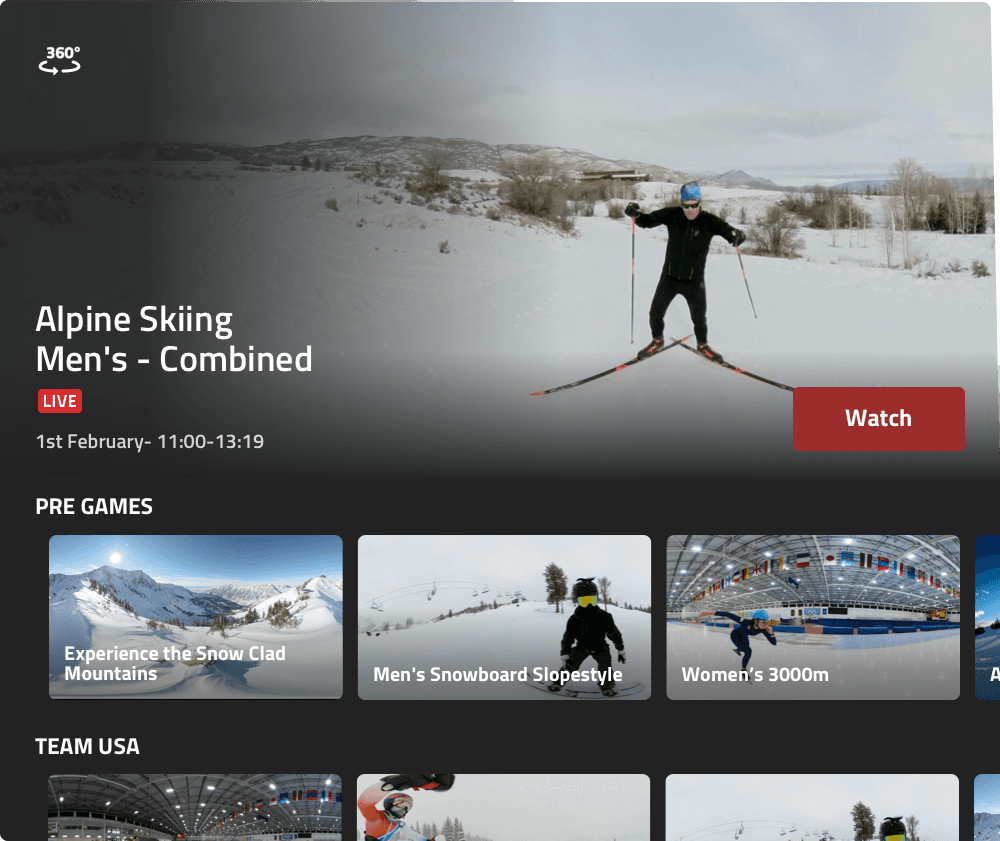
One event, held forward
The live moment stays primary. The full library remains one step behind.
Progressive disclosure
Show what is on now. Reveal session, time and venue only when asked.
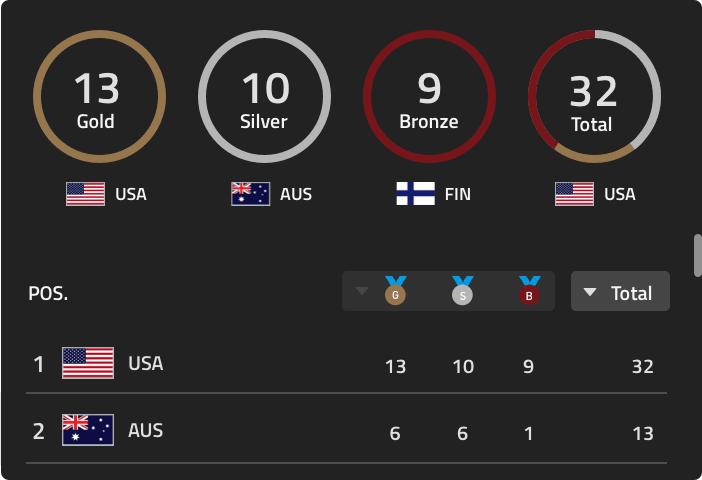
Contextual overlays
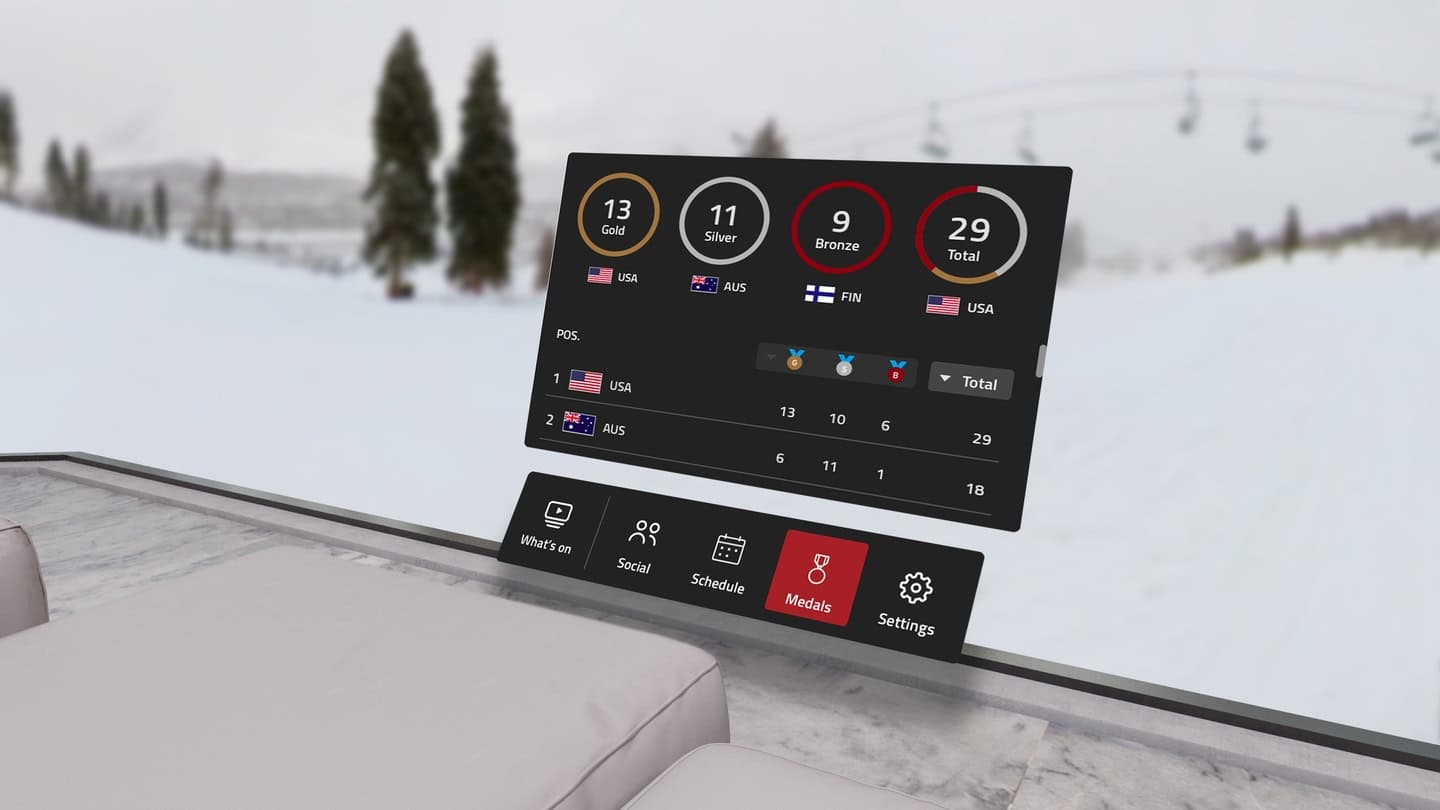
Standings appear when useful, over the live scene rather than instead of it.
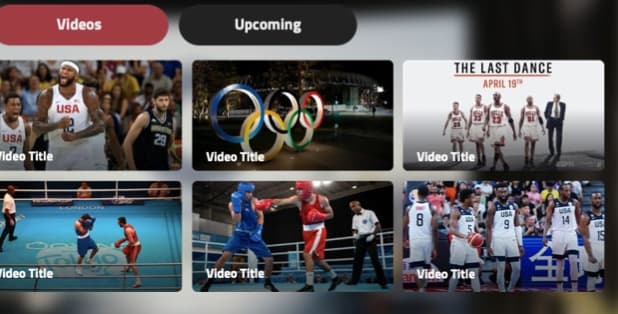
Personal layers
Saved content stays close without competing with the moment.
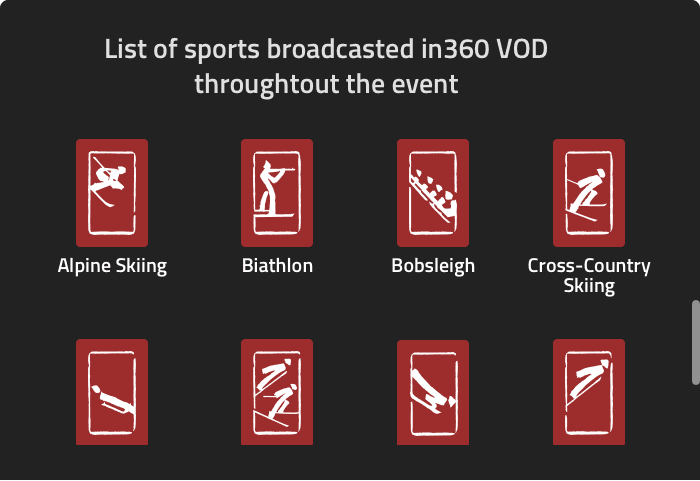
Content continuity
Every sport stays reachable during and after the live moment.
One system. Three depths of engagement.
06
Five frictions, and what the system did about each. The right-hand column is the only thing the viewer ever sees.
| Friction | System decision | Viewer benefit |
|---|---|---|
| Hard to find what is worth watching | Hold one live event forward, place curated rows beneath it and keep the full library one step behind. | Less hunting. More presence. |
| Live action moves faster than a menu | Reduce the watching view to the few controls needed in the moment; everything else waits on the dash. | Nothing blocks the moment. |
| Statistics pull the viewer out of the venue | Open standings and schedules over the live scene instead of replacing it. | Understand without leaving. |
| Depth turns into density | Reveal medals progressively—country or sport, then event, then medallists. | Detail on request, never on arrival. |
| Company arrives as clutter | Keep social as a deliberate destination on the dash, never an unsolicited layer. | Connected, not distracted. |
07
A live Games does not wait for a research cycle. Validation happened where the product did—inside the headset, against the build, between drops.
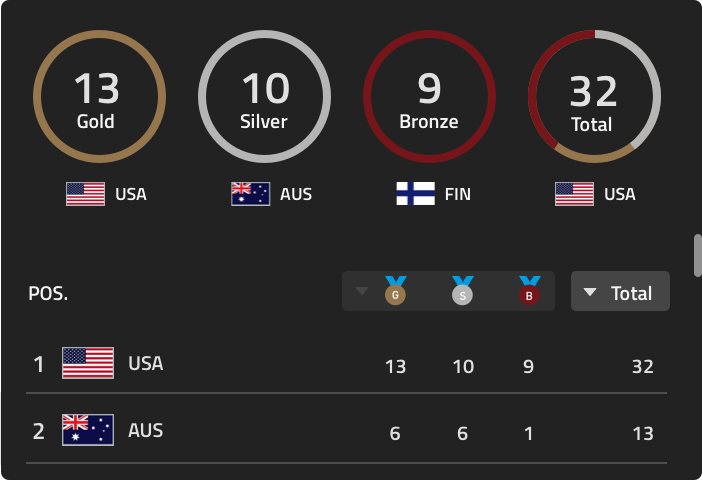
Panels were positioned in the forward field and reviewed inside the headset—not signed off on a monitor.
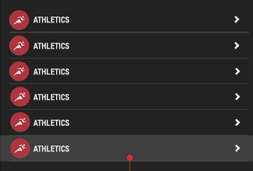
Type, contrast and targets were checked at the actual viewing scale rather than at arm’s length.
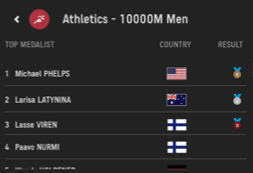
Complex flows were specified as explicit states so each layer could be assessed against the live build.
Persistent orientation
Its position and order remained consistent across every state, turning return navigation into muscle memory rather than a search.
Medals overview

By sport
Event detail
In all three states the dash keeps the same five items in the same order, with Medals in the same position.
This was design validation and iteration inside the headset, run against the build. It was not a formal usability study, and no participant, task-completion or eye-tracking data is claimed.
08
A system designed for the intensity of live sport carried programming, participation and immersion at Olympic scale.
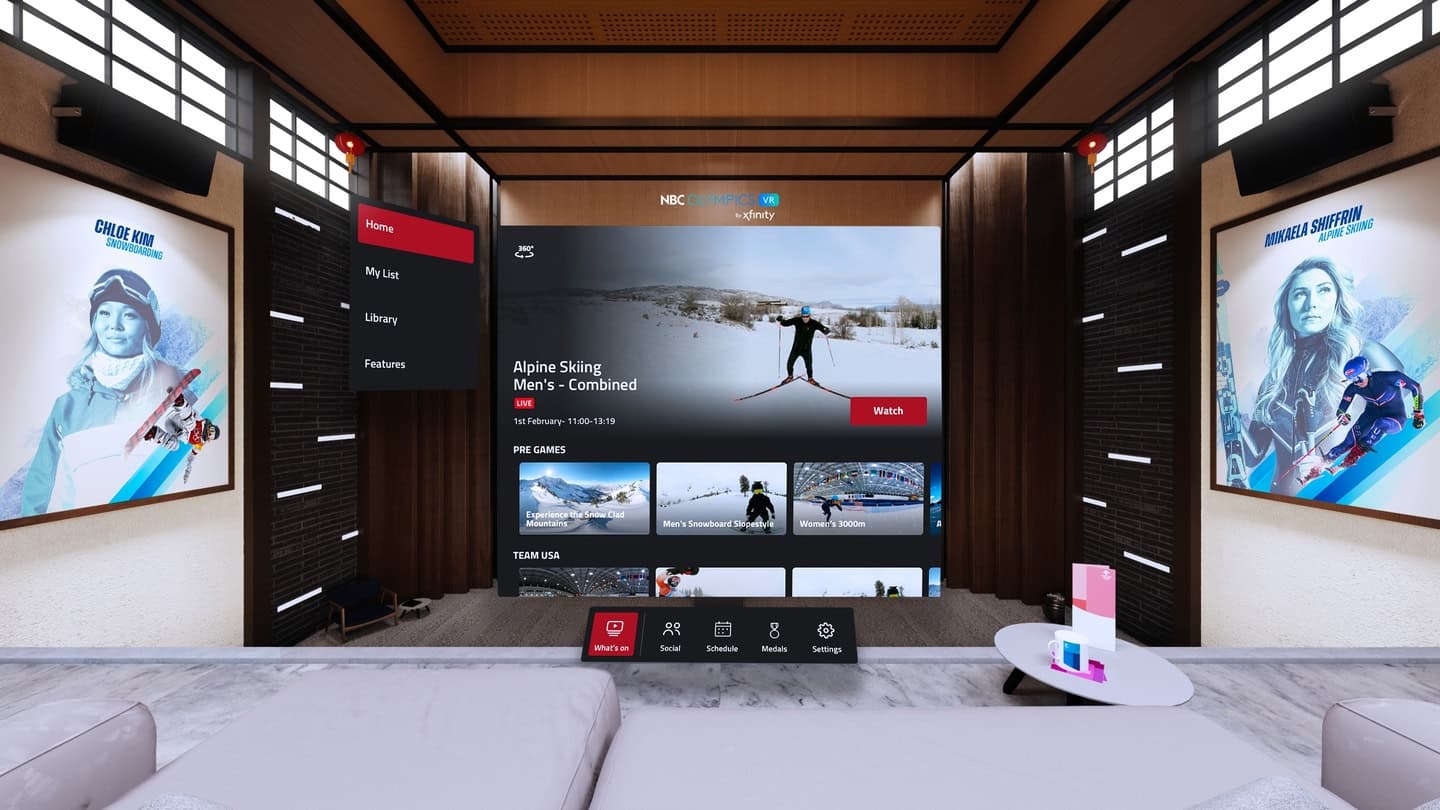
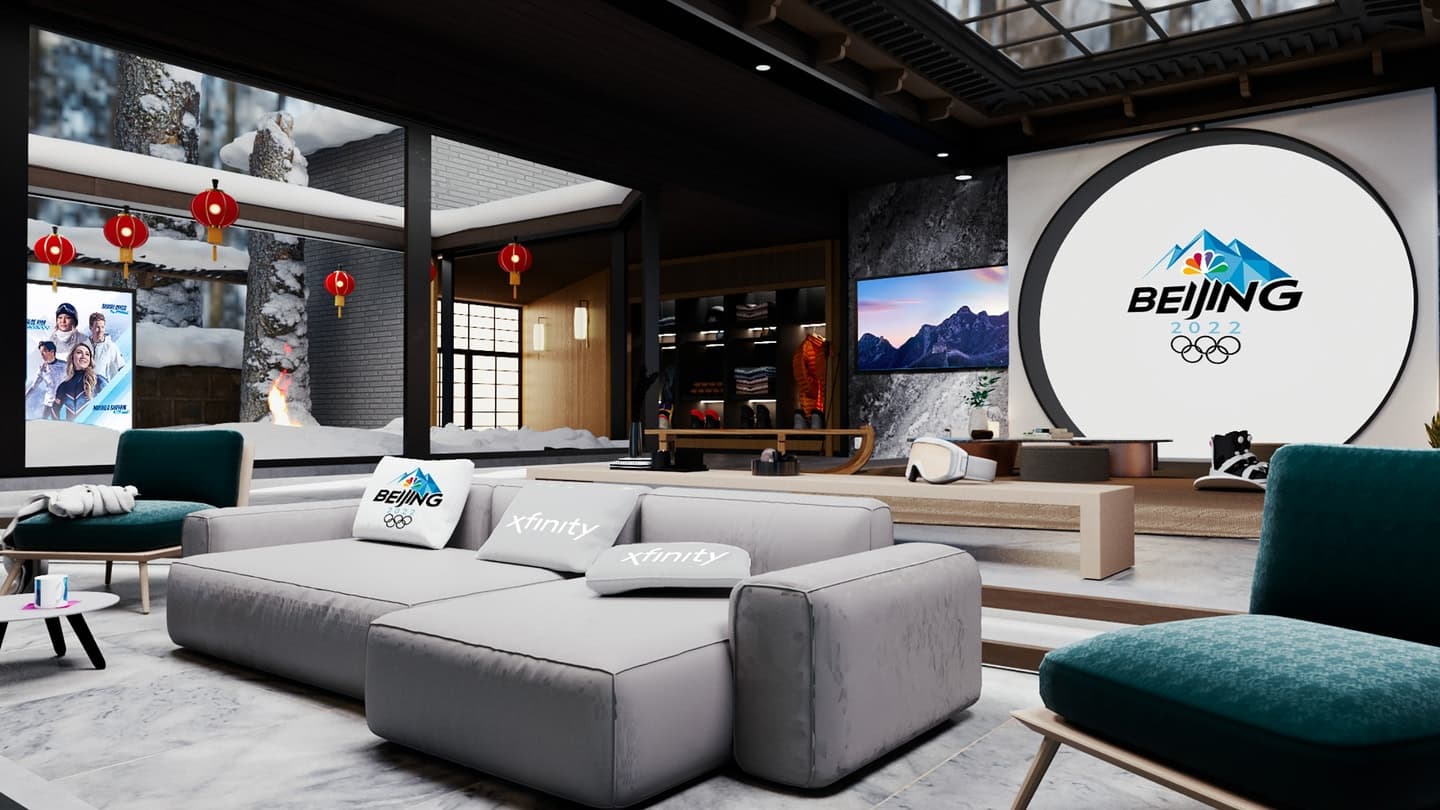
Hours are recorded in this portfolio’s project data. Engagement and session figures were supplied by NBC and are reported as provided.
09
What the system had to settle before the venue existed, and what the venue proved about it.
System foundation
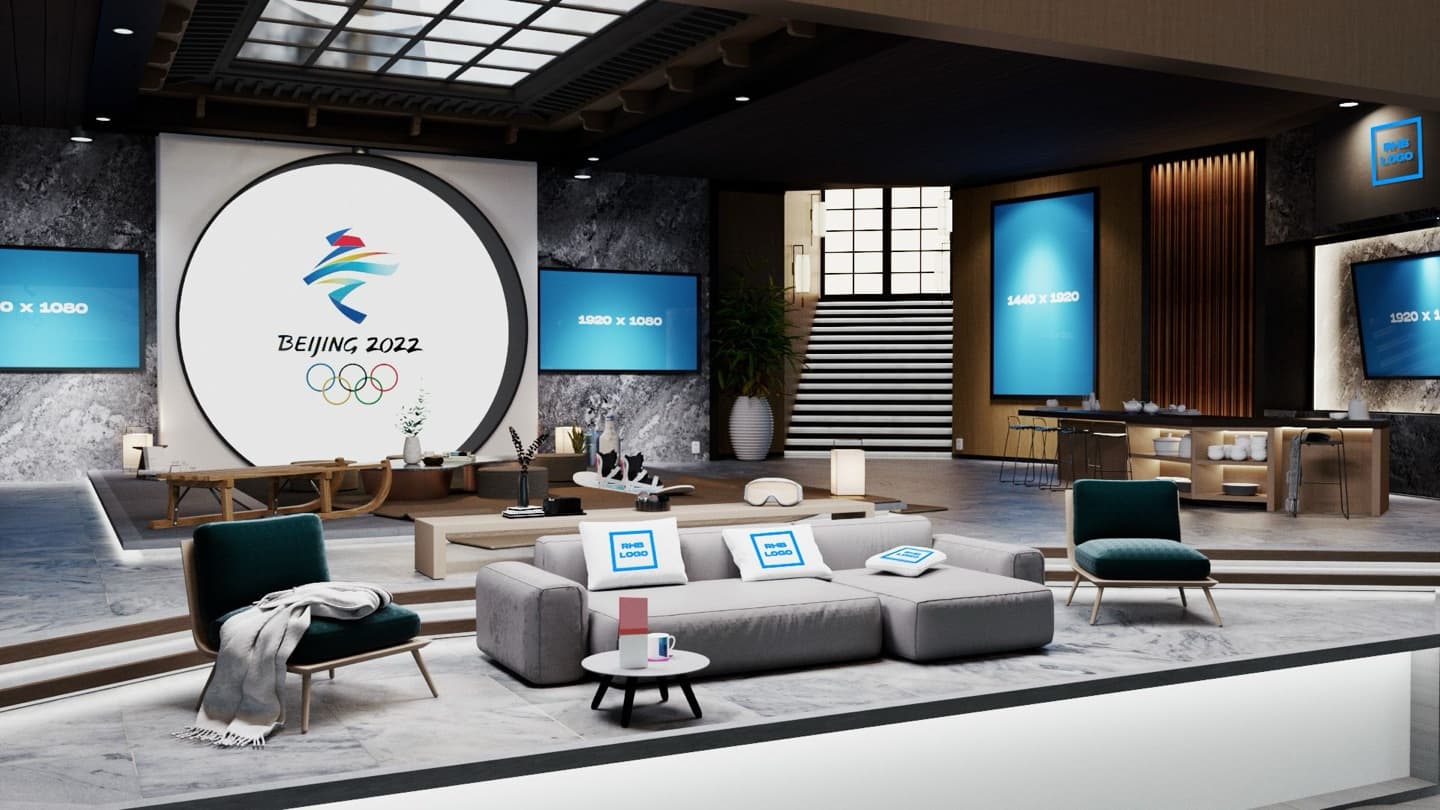
Designed the spatial, navigation and content rules before applying the final environment.
Beijing in context
Validated those rules inside a realised venue where architecture, interface and live action had to behave as one system.
The interface was only successful when the room, headset and live moment felt like one continuous experience.
Two Games. One design system. Infinite moments.