AVAashima Vinayak
Skip to content

Cosm / Spatial booking / 2024—25

Booking the Unknown

Designing a spatial booking experience that helped guests understand where they would sit, what they would see and what kind of experience they were choosing — before committing to a ticket.

Role
Lead Product Designer
Scope
Research · Spatial UX Seat selection
Outcome
Launched for opening night
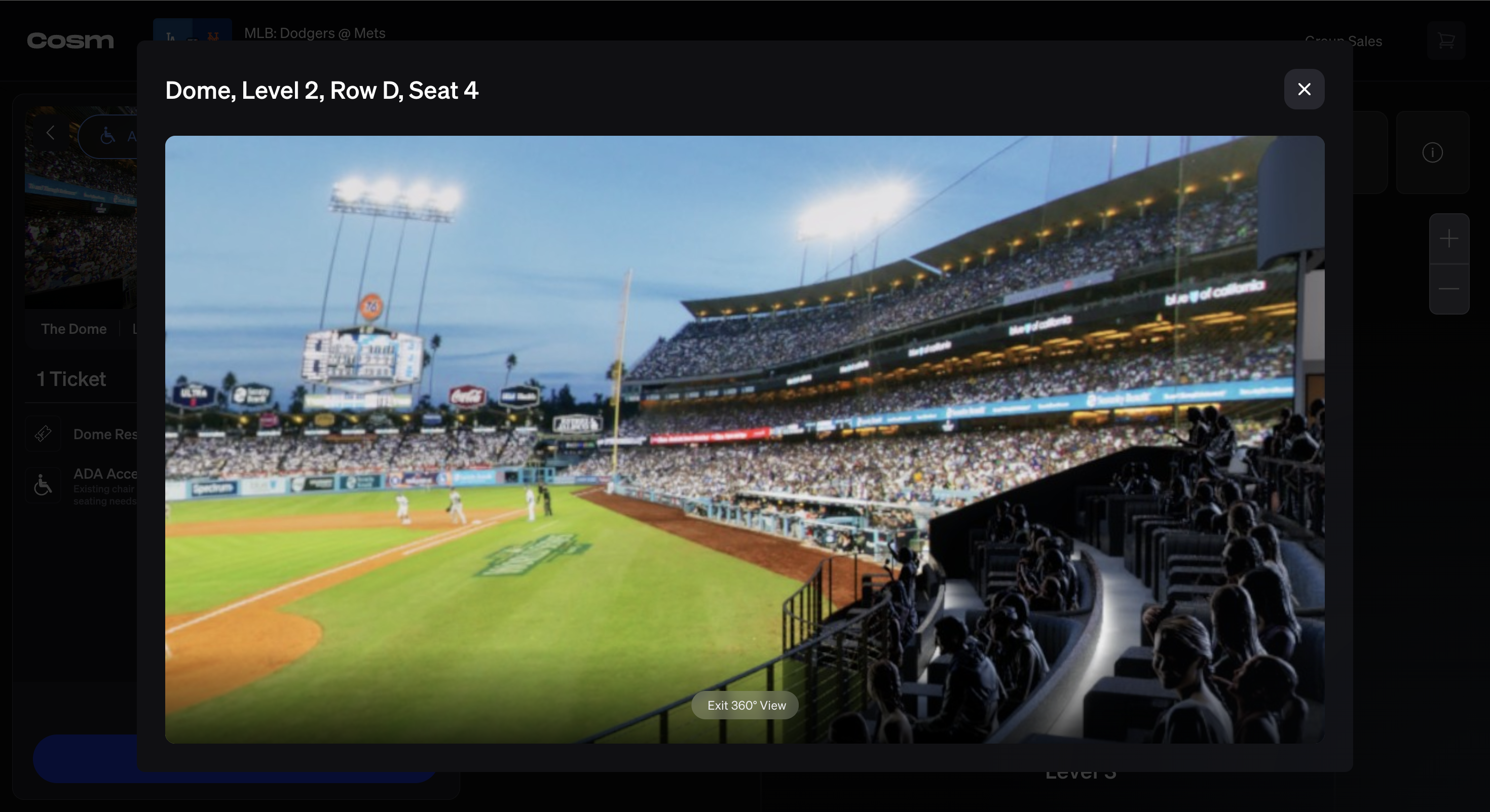
A full-bleed photographic view taken from a specific seat, showing what the guest would actually see of the field from that position.
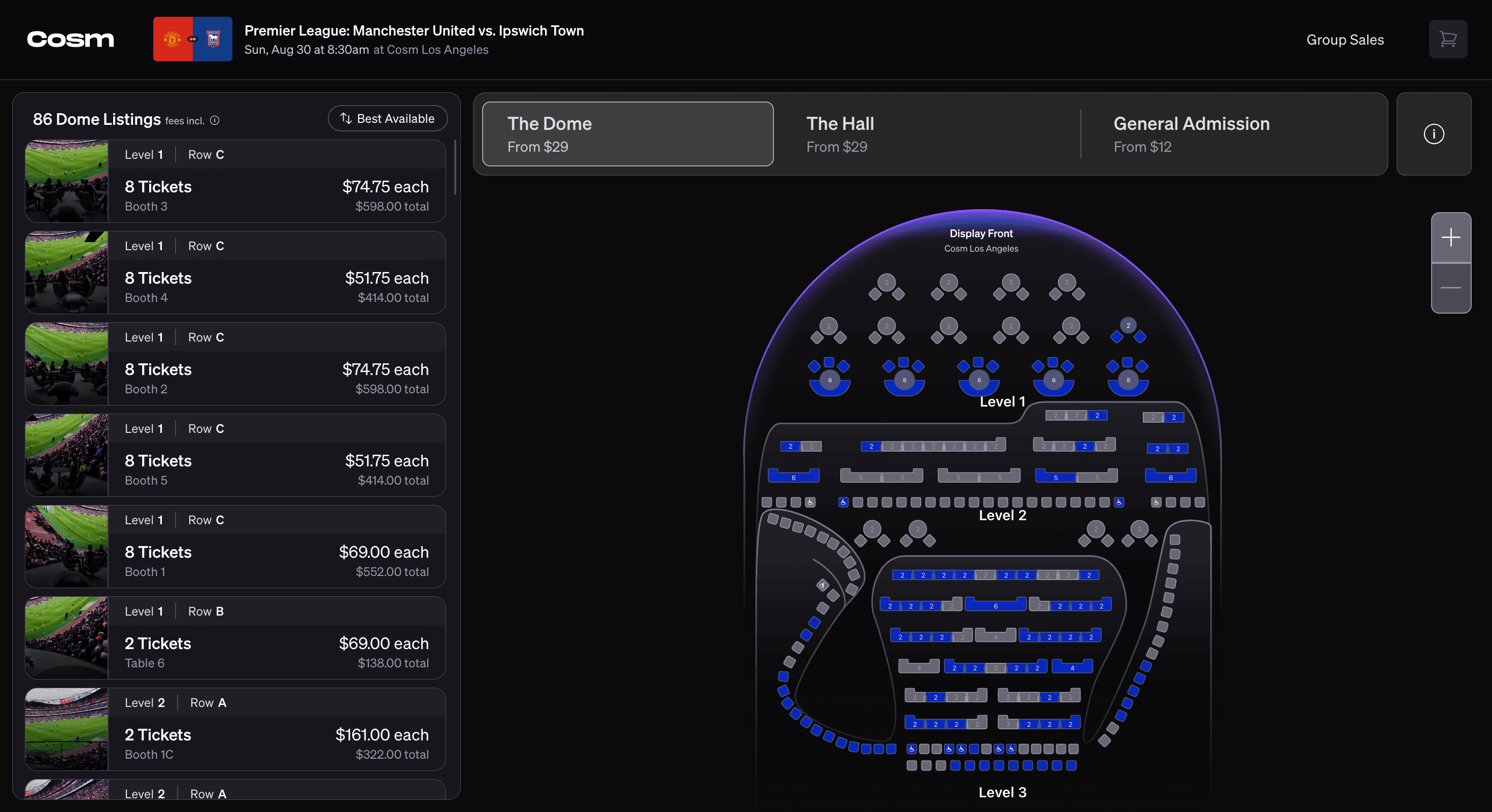
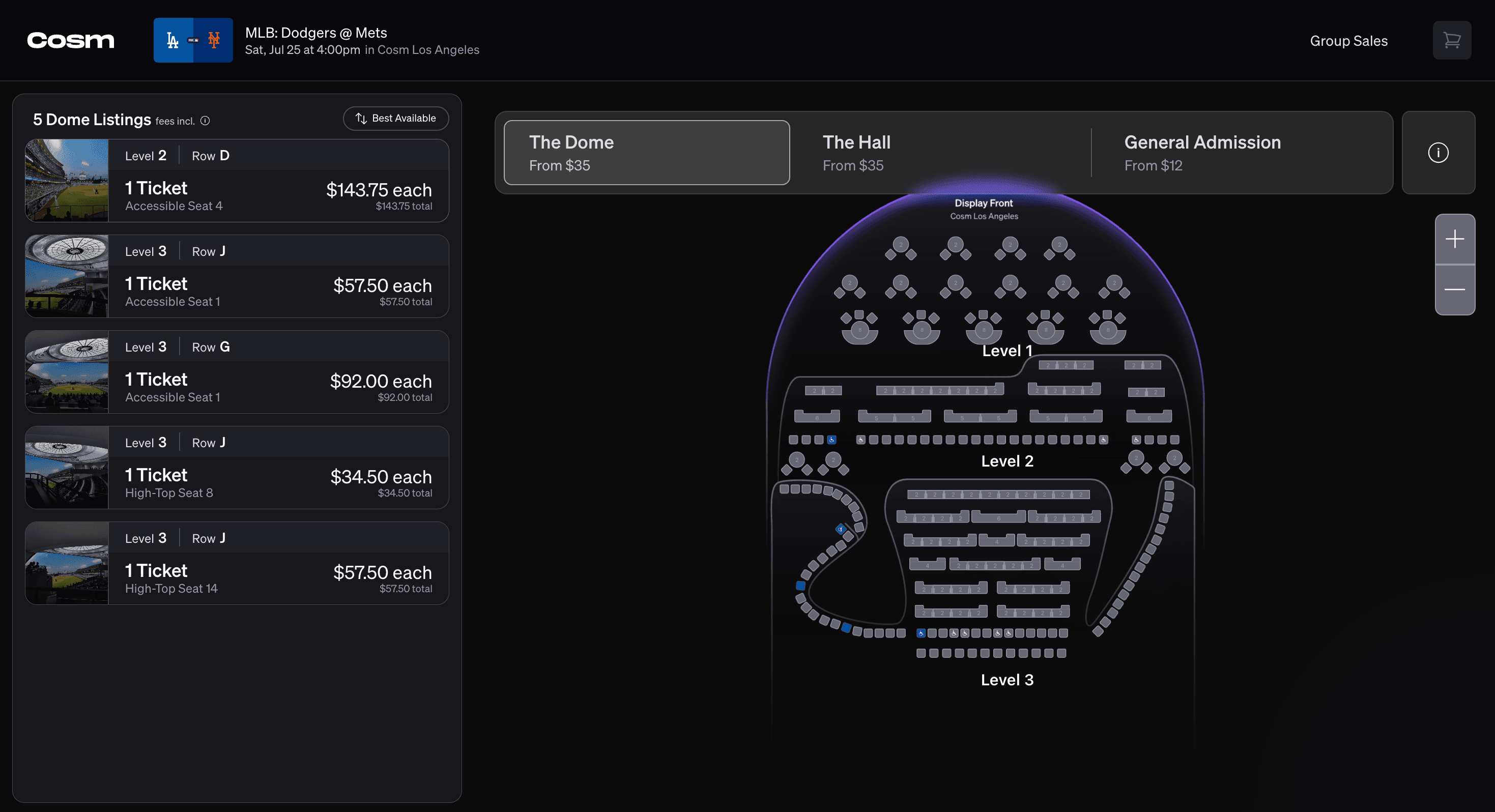
The Dome listings rail: each available seat shown with its level, row, ticket count and price beside a thumbnail of the view from that seat.
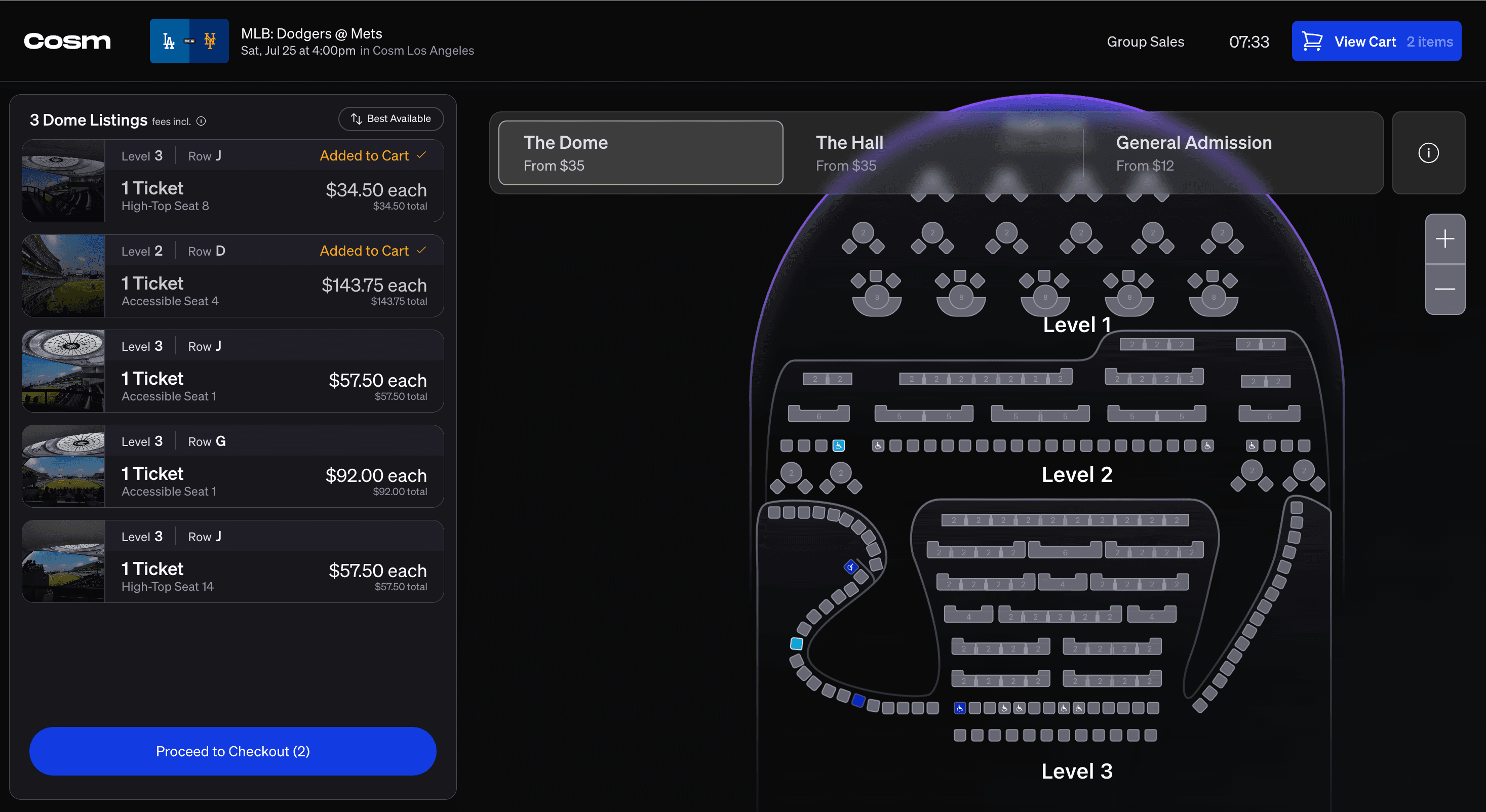
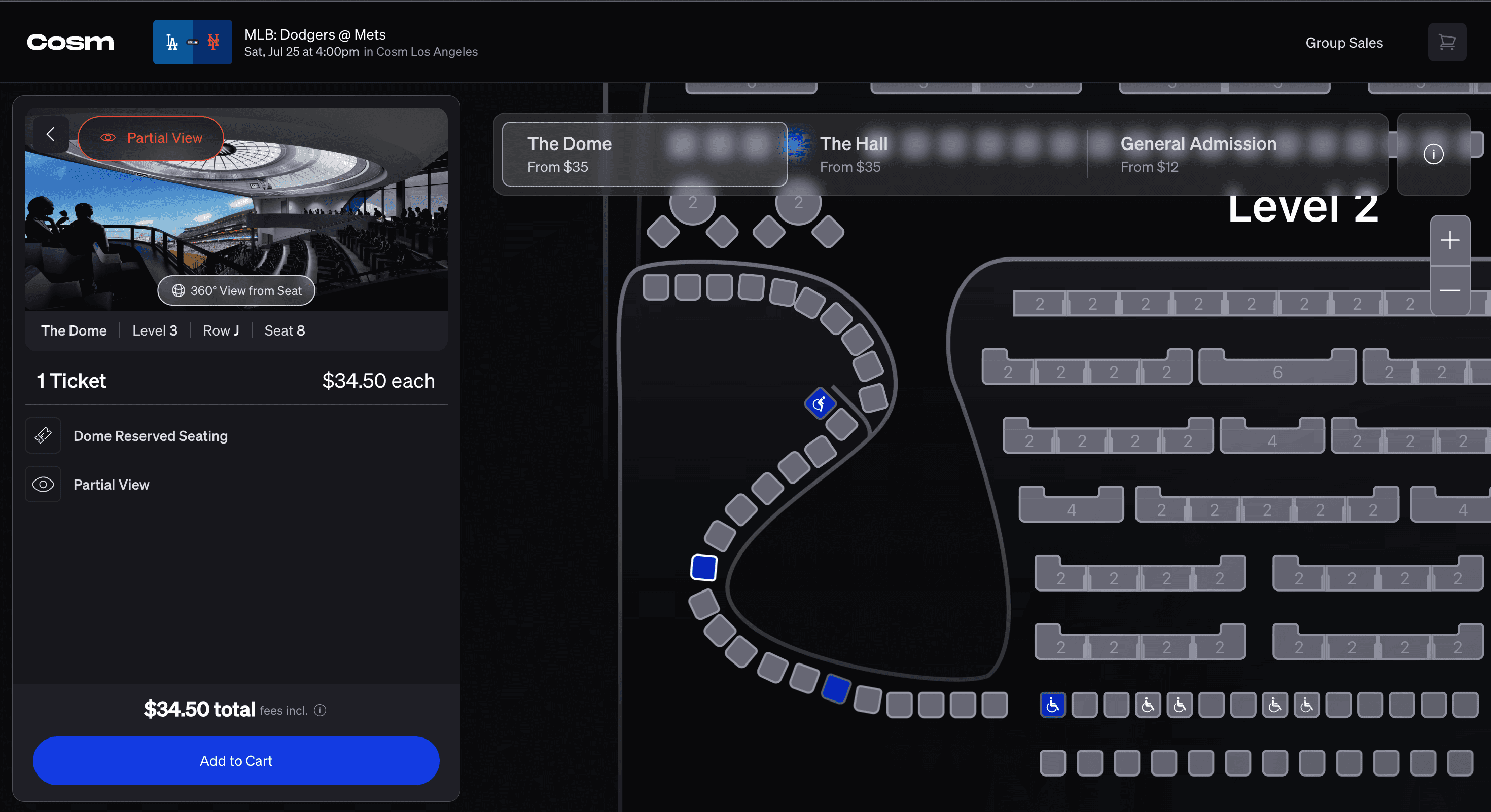
Seat selection with a persistent detail rail: the zoomable level-two seat map sits beside a panel holding price, sightline and accessibility for the highlighted seat.

01

The unfamiliarity gap

Guests could not rely on memory, familiarity or word of mouth. They needed a system that showed the experience instead of only describing it.

  • No spatial context

    Guests could not picture where they would sit or what the seat would give them.

  • Unclear choices

    Dome, Hall and General Admission appeared as prices rather than distinct experiences.

  • Orientation anxiety

    Inside the seat map, guests struggled to understand where they were looking and what the view would be.

Before: understanding had to be assembled from five unconnected sources — seating charts, reviews, photos, social media and word of mouth — all converging on one guest with no order between them. After: one guided booking path leads that same guest through four ordered steps — 01 orient, 02 compare, 03 select, then 04 confirm.
  1. Zoom out
  2. Orient
  3. Zoom in
The Cosm booking seat map: an illuminated dome seating bowl with ticket listings tiered alongside it, each row showing section, row and price.

The booking experience for a new category of venue cannot borrow patterns from existing ones. Trust begins by clearly showing people what they do not already know.

Design principle

02

Three decisions that
reduced uncertainty

  • 01

    Spatial mental models, not seat names

    Guests needed to understand the venue before choosing an exact seat. The venue resolves first as a whole, and only then narrows to seat level — so the map is read as a place rather than a grid of codes.

  • 02

    Price and choice clarity

    Guests needed to compare experience types, availability and pricing without losing their place. Prices stay persistent across views, so a comparison never costs the context it was made in.

  • 03

    Explicit orientation cues

    Every view had to state where the guest was, what they were looking at, and what would happen next. Orientation is carried by the interface rather than reconstructed by the guest.

03

One choice, three synchronized views

The guest moves from venue to seat to perspective without rebuilding context at each step.

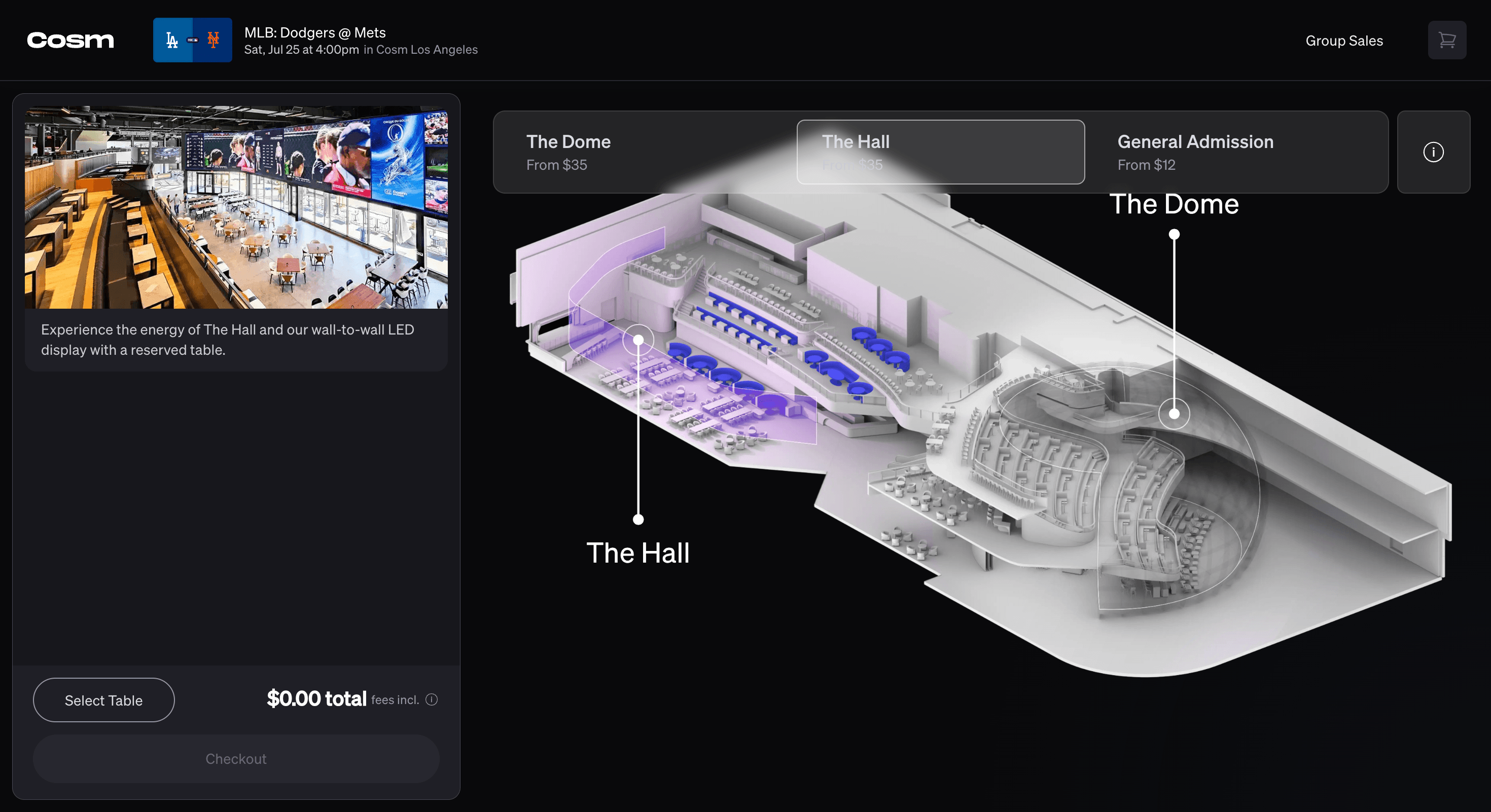
  1. A three-dimensional cutaway model of the Cosm venue with The Hall and The Dome identified, used to orient the guest before any seat map appears.Selected seat, The Dome, Level 2, Row D, Seat 4
  2. The detailed Dome seating map: the full bowl drawn as Level 1, Level 2 and Level 3, with availability shown per seat and table beside a scrolling list of Dome listings.Selected seat, The Dome, Level 2, Row D, Seat 4
  3. A full-bleed photographic view taken from a specific seat, showing what the guest would actually see of the field from that position.Selected seat, The Dome, Level 2, Row D, Seat 4

The DomeLevel 2Row DSeat 4

  1. 01Venue overviewWhich experience am I entering?Choose between Dome, Hall and General Admission with the venue shown in context.
  2. 02Detailed Dome mapWhere exactly will I be seated?Enter the selected Dome, understand its levels and choose Level 2 · Row D · Seat 4.
  3. 03View from seatWhat will the experience look and feel like?Preview the actual perspective associated with the selected location before continuing.

One selection remains visible from venue to seat to perspective.

04

The booking model

A progressive path from venue to seat to perspective.

  1. 01

    Venue type

    Which experience am I entering?

  2. 02

    Level & zone

    Where inside the venue should I look?

  3. 03

    Seat selection

    Where exactly will I be seated?

  4. 04

    View from seat

    What will the experience look and feel like?

The Dome · Level 2 · Row D · Seat 4

One selection remains visible from venue to seat to perspective.

Evidence
Venue context, the detailed seat map and the real seat perspective remain connected throughout the decision.
Strength
Each step answers one question at a time, reducing the amount of spatial information the guest must hold in memory.
Trade-off
More context is introduced before checkout, but the guest reaches confirmation with a clearer understanding of what they selected.

05

Designing the selection experience

The Cosm booking seat map: an illuminated dome seating bowl with ticket listings tiered alongside it, each row showing section, row and price.

01

Ticket-type selection

User need
Dome, Hall and general admission are different experiences, not different price points.
Design decision
Each ticket type is framed by what the guest would experience, with pricing attached to that framing rather than leading it.
Why it holds
The first decision becomes a choice between experiences, which is the choice the guest is actually making.
A three-dimensional cutaway model of the Cosm venue with The Hall and The Dome identified, used to orient the guest before any seat map appears.

02

Venue orientation

User need
A guest arriving at an unfamiliar format has no model of the room to reason with.
Design decision
A three-dimensional cutaway identifies The Hall and The Dome and places the guest inside the venue before any seat map is offered.
Why it holds
Orientation happens before selection, so the map is entered already knowing what it represents.
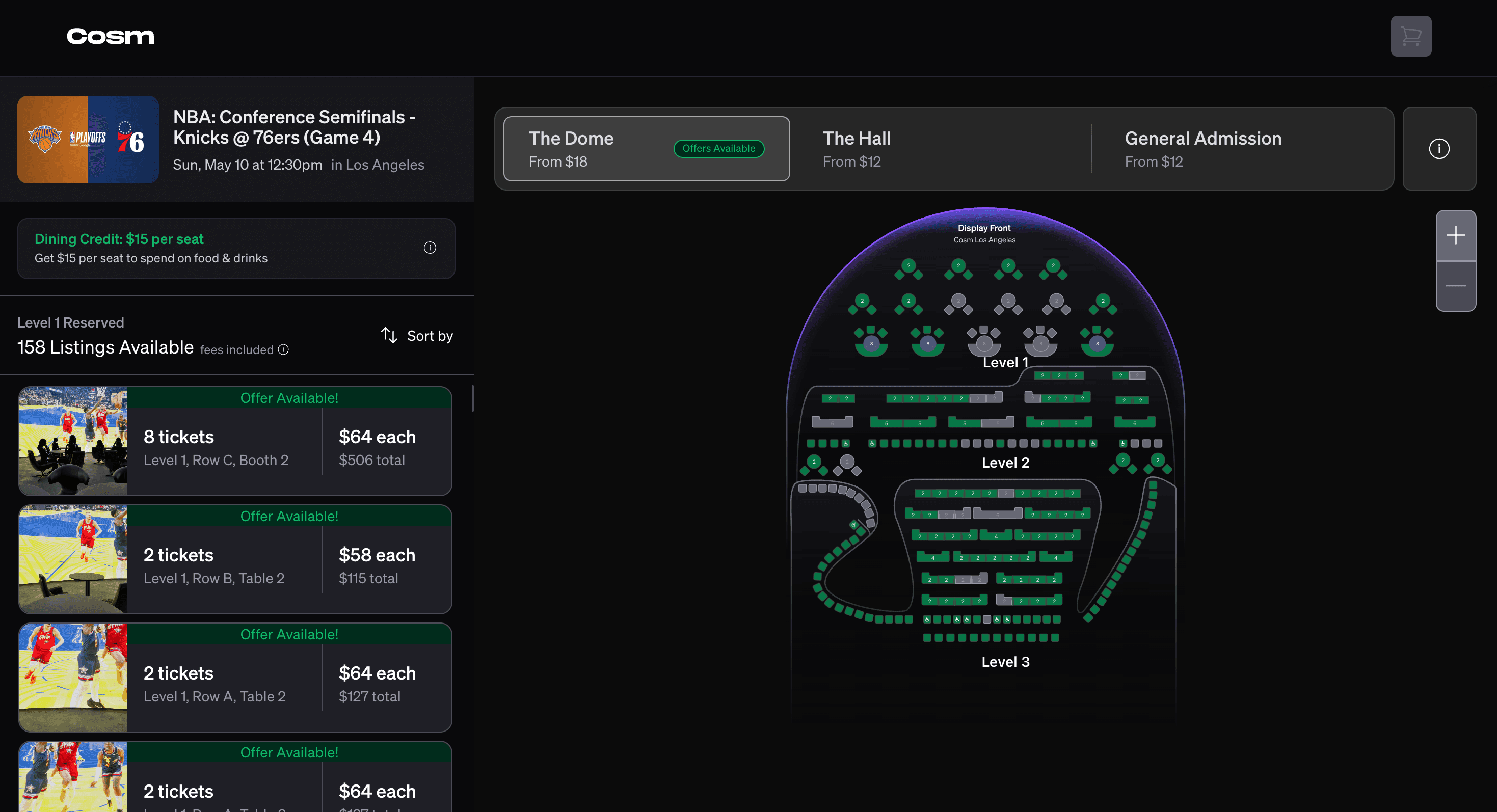
A promotional offer surfacing directly on the seat map at the moment a seat is selected, with the adjusted price shown in place.

03

Seat map

User need
Choosing a seat means judging sightline, price and availability at the same time.
Design decision
A persistent detail rail holds price, sightline and accessibility while the map zooms and pans, and offers surface in place at the moment of choice rather than as a banner.
Why it holds
The information needed to judge a seat stays put while the thing being judged moves.
The cart summary listing the chosen dome tickets with a running total and the checkout action, kept alongside the map rather than replacing it.

04

Booking confirmation

User need
Reconsidering a seat should not cost the guest their place in the flow.
Design decision
The cart stays with the map, carrying a running total, so a change of mind is a revision rather than a restart.
Why it holds
The final step confirms what changed instead of merely totalling it.

Built for confidence, not novelty

  • Show context early

    Lead with the whole venue, then narrow with purpose.

  • Keep price persistent

    Transparency across every view and every decision.

  • Preserve orientation

    Never let the guest lose track of where they are.

  • Confirm what changed

    Summarise the choice before asking for commitment.

06

A system for unfamiliar places

A modular system that translates venue complexity into confidence.

Built from the same spatial model used across orientation, selection and confirmation.

Components

  • Seat map
  • 3D venue model
  • Stadium view
  • Orientation compass
  • Price badges
  • Filters and chips
Venue orientation modelDisplay frontLevel 1Level 2Level 3
One spatial model · shared across every view

States

Reusable patterns

Persistent price bar
Price stays legible through every view change.
View synchronization
Seat map, stadium view and model share one selection.
Section filters
Availability narrowed without leaving the map.
Breadcrumbs
Venue, level and section stated at all times.

07 / Outcome

Turning an unfamiliar venue into a booking decision guests could make with confidence.

The experience connected spatial orientation, ticket selection and venue context into one continuous booking model — giving guests the information they needed before committing to an unfamiliar experience.

My contribution covered the initial research, spatial mental models, mini-map design and the seat-selection experience.

0 → 1
New spatial booking modelDesigned without an existing pattern to follow.
04
Guest questions resolvedExperience, orientation, seat and view — answered before checkout.
03
Spatial layers unifiedSeat map, stadium view and 3D venue model.

Live on opening night

Released inside Cosm's consumer booking experience.

Evidence reflects delivered product scope and launch context; no standalone conversion attribution is claimed.

08

What I would carry forward

  • Design for understanding before efficiency

    Shortening the path is the wrong goal when the guest does not yet know what they are choosing between.

  • Build spatial context into the decision model

    Orientation is not a supporting feature of the flow; for an unfamiliar venue it is the first decision in it.

  • Measure confidence as well as completion

    A booking that completes without understanding is a booking that arrives as a complaint.